
Comments from Fed officials and headlines surrounding the conflict with Iran contributed to market volatility, while new home sales reached their highest pace of the year. Here's what you need to know.
· Fed Comments, Geopolitical News Add to Market Volatility
· New Home Sales Strengthen in August
· Jobless Claims at a Glance
Fed Comments, Geopolitical News Add to Market Volatility
Comments from Federal Reserve officials were a key driver of market volatility. On Wednesday, Fed Governor Michael Barr said further rate increases may be needed to bring inflation back to the Fed’s 2% target “in a timely fashion.” He also said inflation risks have increased, while risks to the labor market have eased. New York Fed President John Williams and Philadelphia Fed President Anna Paulson also signaled that another rate hike may be appropriate on Thursday.
These comments came shortly after the Fed raised its benchmark Federal Funds Rate by 25 basis points at its September 16 meeting. Keep in mind that the Fed Funds Rate is the overnight borrowing rate for banks and is not the same as mortgage rates.
Geopolitical developments also added to market volatility. Comments from President Trump and Iranian President Masoud Pezeshkian at the United Nations General Assembly increased uncertainty around the conflict and negotiations, with markets also watching the potential impact on oil prices.
Bottom line: The Fed has two meetings remaining this year, on October 27-28 and December 8-9. Following the latest comments, markets increased the odds of another rate hike at the October meeting.
New Home Sales Strengthen in August
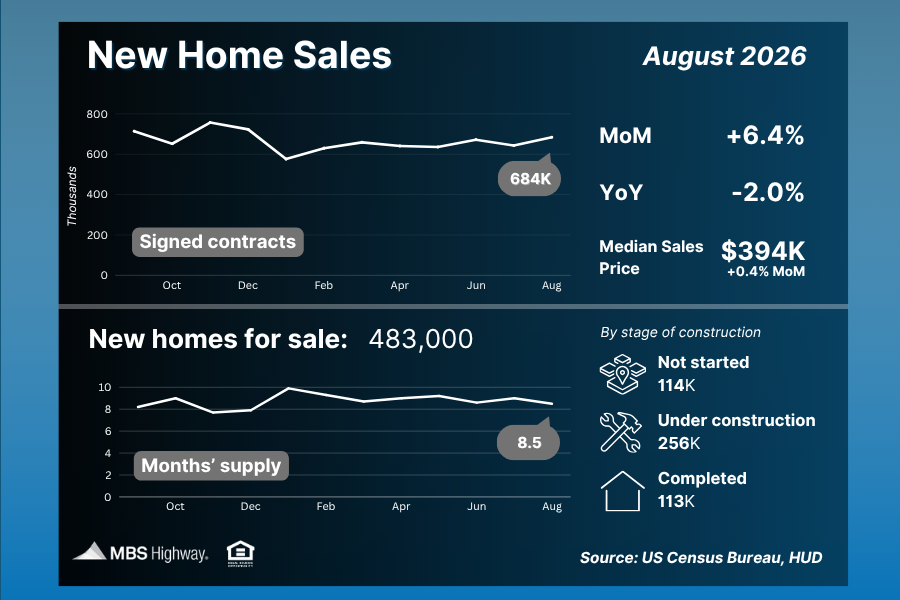
New home sales rose 6.4% from July to August, reaching a seasonally adjusted annual rate of 684,000 – the highest pace of the year and above expectations. July’s sales were also revised higher by 36,000, to an annualized pace of 643,000. Compared with a year ago, August sales were down 2%.
Because the report is based on signed purchase contracts, the August results offer a snapshot of homebuyer activity during the month.
Bottom line: A 5.8% year-over-year decline in the median new home price led to some headlines suggesting that home prices are falling. But the median price can be heavily influenced by the mix of homes sold. In August, sales of homes priced below $500,000 increased notably from a year earlier, helping pull the median price lower.
In other words, a lower median sale price doesn’t necessarily mean home values are declining. Broader housing market data continues to point to home price appreciation nationwide.
Jobless Claims at a Glance
New unemployment claims edged down to 197,000, while continuing claims remained near 1.72 million.
Bottom line: Initial claims are still relatively low by historical standards, but they may not capture the full picture. Some people who lose their jobs may turn to freelance, contract or gig work instead of filing for unemployment, which could leave some weakness in the labor market out of the data.
Meanwhile, continuing claims have fallen from recent highs, but some of that decline may reflect benefits expiring rather than people finding new jobs.
Related posts
.png)
Fed, Geopolitics Fuel Volatility; Home Sales Improve


FAQ: Can the seller help pay my closing costs?
.png)
Fed Hikes Rates, Home Construction Cools
Ready to close more deals?
ListReports automatically delivers personalized marketing collateral to your inbox helping you engage with your customers and prospects.