
Hotter-than-expected inflation, a rebound in existing home sales, and the story behind the retail sales numbers. Here’s what you need to know.
· Hotter Inflation Puts the Fed in Focus
· Existing Home Sales Post Modest Gain
· Quick Look: Consumer Spending and Unemployment
Hotter Inflation Puts the Fed in Focus
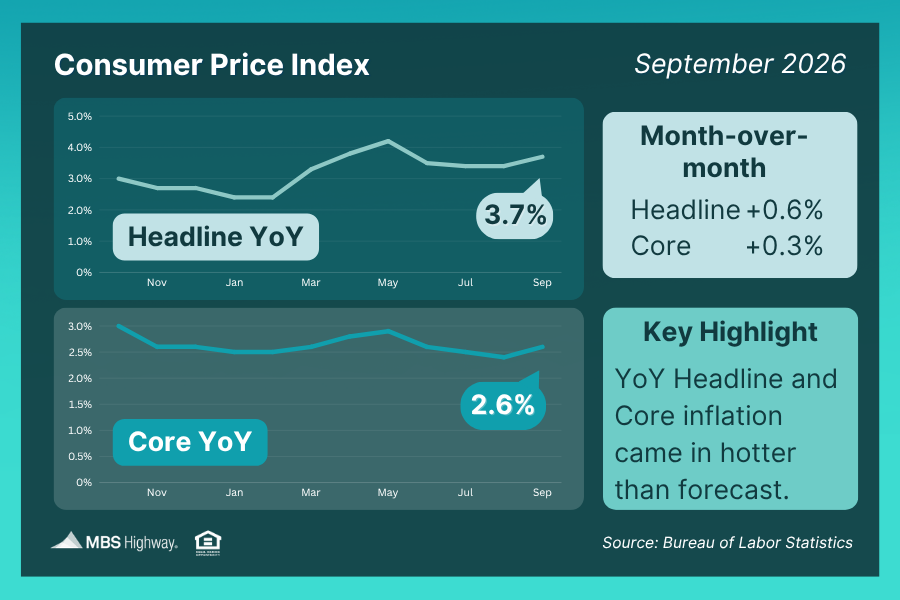
Inflation picked up in September, with the Consumer Price Index (CPI) rising 0.6% from the previous month, largely due to higher gas and energy costs. Annual inflation increased from 3.4% to 3.7%, coming in above expectations.
Core CPI, which excludes food and energy, rose 0.3% for the month and 2.6% over the past year. Both readings came in hotter than economists expected.
Wholesale inflation also surprised to the upside. The Producer Price Index (PPI), which measures prices businesses receive for their goods and services, rose 1.3% in September – more than twice the expected increase. Annual wholesale inflation climbed from 5.6% to 6.3%. Core PPI also came in hotter than expected, rising 0.7% for the month.
Bottom line: The Fed raised its benchmark Federal Funds Rate by 25 basis points in September, in part due to persistent inflation. Meeting minutes also suggested that most members saw another rate hike as appropriate by year-end. Remember, the Fed Funds Rate is the overnight borrowing rate for banks – it’s not the same as mortgage rates.
With two Fed meetings remaining this year, on October 27-28 and December 8-9, investors will be watching closely to see how the latest inflation reports influence the Fed’s next move.
Fed Chair Kevin Warsh spoke later in the week and said the economy has largely performed as expected since the September rate hike, without directly addressing the hotter-than-expected inflation reports. Markets appeared to interpret his remarks as a sign the Fed could hold rates steady in October, though expectations can shift quickly as new data comes in.
Existing Home Sales Post Modest Gain
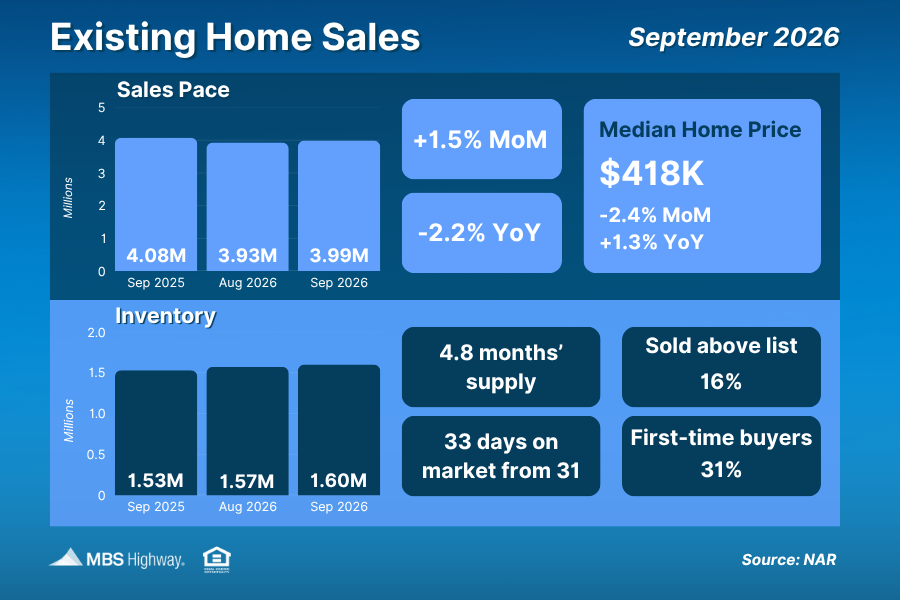
Existing home sales rose 1.5% from August to September, ending a three-month slide. However, sales remained 2.2% below year-ago levels, reaching a seasonally adjusted annual rate of 3.99 million homes.
The number of homes available for sale also continued to climb, rising 1.9% from August and 4.6% from a year earlier.
Bottom line: National Association of REALTORS® Chief Economist Lawrence Yun noted that August and September were the slowest months for home sales this year, despite September's monthly gain. He also pointed to rising inventory and longer selling times as factors giving buyers more negotiating power.
Quick Look: Consumer Spending and Unemployment
Retail sales rose 0.8% in September, more than double expectations. The report measures total dollars spent, so higher gas prices helped boost the overall number by increasing sales at gas stations. Excluding gasoline, retail sales grew just 0.2%, suggesting consumer spending may not be as strong as the headline number indicates.
Unemployment claims have told the same story in recent weeks, with initial filings remaining low at around 199,000. However, these figures may not capture everyone looking for work, as some people who lose their jobs may turn to freelance or gig work rather than file for unemployment benefits.
Meanwhile, continuing claims remained near 1.71 million. Although they have declined from recent highs, that drop may not mean more people are finding jobs, as some workers may have simply exhausted their benefits.